

Fresh Roasted Coffee Delivered to Home
What Makes Fresh Roasted Coffee Delivered to Your Home Different
When beans are roasted, they begin releasing CO2 immediately in a process called degassing. Fresh roasted coffee delivered to your home arrives at its peak flavor window, typically within 1-14 days of roasting, when volatile compounds that create complexity and depth are still present (peer-reviewed research). At Wild Mustang Roasters, we understand that freshness is the foundation separating craft coffee from commodity coffee.

The real difference comes down to control. Traditional retail coffee has already spent time in distribution, warehousing, and store shelves before reaching you. Roasted-to-order coffee eliminates those middlemen. You get beans roasted days ago, not months. Grocery store bags rarely show roast dates, and subscription services from major chains often source beans roasted weeks prior. When fresh roasted coffee is delivered directly from a specialty roaster, you see exactly when it was roasted.
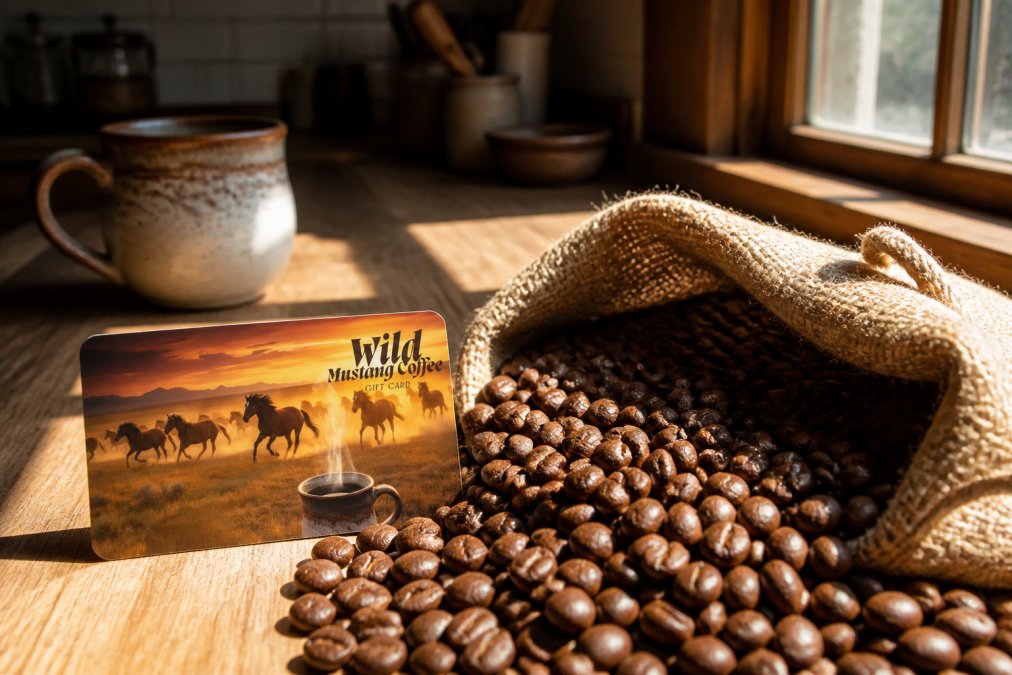
Roasted-to-Order Coffee Beans: Why Timing Matters
The roast date is the most important number on your coffee bag. Roasting is a chemical transformation where green coffee beans are heated to around 400°F, triggering hundreds of reactions that create flavor, aroma, and color (peer-reviewed research). The moment beans cool, the clock starts. Within the first 12-24 hours, beans release CO2 so aggressively they're difficult to brew properly (peer-reviewed research). After waiting 2-3 days, beans hit their prime: full flavor development, proper degassing, ideal for extraction.
This prime window lasts roughly 2-4 weeks depending on storage conditions. After that, brightness fades and complexity flattens. Most grocery store coffee has already been degassing for weeks by the time it reaches your kitchen. When you order roasted-to-order coffee, the timing flips, beans are roasted, packaged, and shipped while still actively degassing, so you brew them during their peak flavor window.
Understanding Roast Dates and Degassing
A roast date tells you when beans reached their peak flavor potential. When you buy fresh roasted coffee delivered to your home, you're buying beans in the middle of their optimal window, not at the tail end. The difference in the cup is significant: brighter acidity, more complex flavor notes, stronger aroma.
Single-Origin vs. Blended Small-Batch Roasts
Single-origin coffee comes from one specific farm, region, or cooperative and lets you taste terroir, the influence of soil, altitude, climate, and processing on flavor. A Peru single-origin might show salted caramel and citrus notes; an Ethiopia single-origin might offer floral and fruity characteristics.
Blended coffees combine beans from multiple origins to achieve specific flavor profiles. A roaster might combine Brazilian beans with another origin to create a smooth blend with chocolate notes and low acidity. Blends are often more forgiving to brew and approachable for newcomers to specialty coffee.
Wild Mustang Roasters offers both. The Trailblazer Single-Origin Sample Pack of 6 (Favorites) at $30.00 includes Brazil Santos, Colombia, Costa Rica, Ethiopia, Honduras, and Tanzania, each showing distinct profiles. The Wild Mustang Sample Pack of 6 (Best Sellers) at $30.00 includes both blends and single-origins.

How to Keep Coffee Fresh at Home After Delivery
Once fresh roasted coffee arrives, you're not trying to stop degassing, that's essential for proper extraction. You're trying to slow oxidation and protect beans from moisture and heat, which accelerate staleness.
The enemies of fresh coffee are exposure to air (oxidation), heat, light, and moisture. Your job is to minimize all four.
Storage Containers and Environmental Factors
The ideal storage container is airtight, opaque, and kept in a cool, dry place. A mason jar with a tight-fitting lid works. A resealable bag with air pressed out works. Many coffee bags come with a one-way valve that lets CO2 escape but prevents oxygen from entering, these bags are excellent storage containers on their own.
Temperature matters more than most realize. Coffee stored at room temperature (65-75°F) stays fresher longer than coffee in warm conditions. Heat accelerates oxidation. Avoid storing beans above the stove or near sunny windows. A cool, dark cabinet away from heat-generating appliances is ideal.
Humidity also matters. Coffee is hygroscopic and absorbs moisture from air. High humidity can cause beans to clump and promote mold growth. In very humid climates, an airtight container becomes more important.
Shelf Life and When to Use Your Beans
Fresh roasted coffee delivered to your home stays optimal for roughly 2-4 weeks from the roast date, depending on storage conditions. After that, it's still drinkable but quality declines measurably. After two months, most coffee tastes noticeably stale.
Whole bean coffee is always better than pre-ground. Ground coffee has exponentially more surface area exposed to air and stales much faster, sometimes within hours. Buy whole bean fresh roasted coffee in quantities you'll use within 2-3 weeks. If you drink one cup per day, a 12 oz bag is perfect. Most specialty roasters, including Wild Mustang Roasters, offer subscription options that deliver fresh coffee on a schedule matching your consumption.
Best Coffee Subscription Services for Home Delivery
A coffee subscription ensures you're always drinking fresh roasted coffee delivered to your home. Instead of waiting until you run out, a subscription delivers fresh beans on a schedule you control. The best services let you customize frequency, roast level, and bean selection.
Wild Mustang Roasters delivers fresh roasted coffee through direct ordering and sample packs that let you explore different profiles before committing to a full subscription. You control exactly what arrives and when.
Subscription Flexibility and Cancellation Policies
The best coffee subscriptions are flexible. You should be able to pause, skip months, change frequency, and cancel without penalty. Look for roasters offering: adjustable delivery frequency, the ability to change your coffee selection before each shipment, the ability to pause without losing your subscription, and straightforward cancellation.
Wild Mustang Roasters' approach is direct: you order what you want, when you want it. The sample packs ($30.00 each) let you try multiple coffees without committing to full-size bags, so you can explore the range before setting up a regular order.
Cost-Per-Cup Analysis and Pricing Models
A typical 12 oz bag of specialty coffee costs between $12 and $18 and makes roughly 12-15 cups, working out to $0.80 to $1.50 per cup. A 12 oz bag of grocery store coffee might cost $8 and make 12 cups at $0.67 per cup. You're paying roughly 85% more for dramatically better flavor and guaranteed freshness.
Sample packs include six 2 oz packs for $30.00, working out to $5.00 per pack. A 2 oz pack makes roughly 2-3 cups, about $1.70 to $2.50 per cup. It's the fastest way to figure out which beans you like before committing to larger quantities.
| Coffee Type | Typical Price (12 oz) | Cost Per Cup | Best For |
|---|---|---|---|
| Grocery store commodity | $8-10 | $0.65-0.85 | Budget-conscious, convenience priority |
| Specialty roaster blend | $12-14 | $1.00-1.15 | Quality and freshness balance |
| Specialty roaster single-origin | $14-18 | $1.15-1.50 | Flavor exploration, peak freshness |
| Sample pack (2 oz) | $5 per pack | $1.70-2.50 | Discovery, trying multiple origins |
Whole Bean vs. Pre-Ground: Which Works Best for You
Whole bean coffee stays fresh for weeks if stored properly. Pre-ground coffee stales within days or hours because grinding exponentially increases surface area exposed to air. A cup brewed from whole beans ground moments before brewing tastes noticeably brighter and more complex than pre-ground coffee from the same roaster on the same day.
Whole bean requires a grinder and takes an extra 60-90 seconds before brewing. If you don't have a grinder or can't grind beans (traveling, limited kitchen space), pre-ground is a legitimate compromise. Wild Mustang Roasters ships whole bean coffee by default for maximum freshness. A basic burr grinder ($30-50) is a worthwhile investment.
Home Brewing Equipment That Pairs with Fresh Roasted Coffee
Fresh roasted coffee deserves brewing equipment that extracts its full potential. Water temperature, contact time, and grind size all matter. The best brewing methods are immersion brewing (French press, cold brew) and pour-over methods (V60, Chemex, Kalita Wave).
A French press is the most approachable specialty brewing method. It's simple, forgiving, and produces a full-bodied cup highlighting the coffee's character. A burr grinder (not a blade grinder) is essential, blade grinders produce inconsistent particle sizes, leading to uneven extraction and muddy flavor.
Wild Mustang Roasters' 34oz French Press (Copper/Stainless Steel) at $59.99 holds roughly 5-6 cups and features borosilicate glass that withstands high temperatures, plus spare filter screens and a cleaning brush. Pair it with whole bean coffee from Wild Mustang Roasters, grind beans immediately before brewing, use water heated to 195-205°F, brew for 4 minutes, and you'll get a cup showcasing why fresh roasted coffee delivered to your home matters.

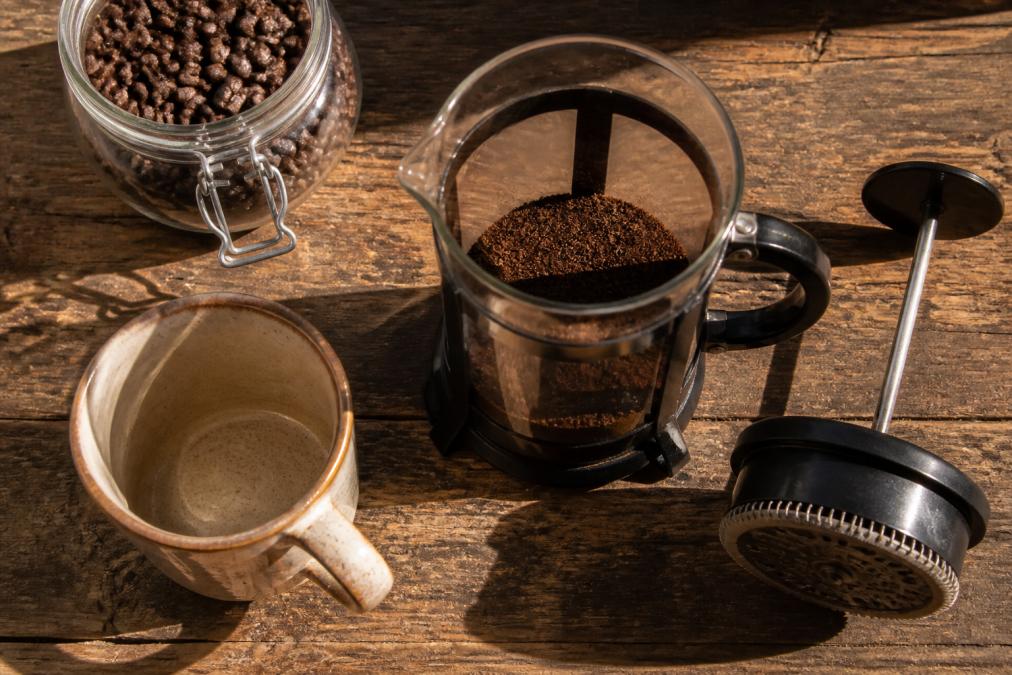
Temperature control matters more than most realize. Water over 210°F over-extracts, making coffee taste bitter. Water under 190°F under-extracts, making coffee taste sour. A simple kettle with temperature display keeps you in the sweet spot. Grind size is equally critical, coffee ground too coarse won't extract enough flavor; too fine will over-extract and taste bitter. A burr grinder ($40-100) with multiple settings lets you dial in the right size for your brewing method.
Conclusion
Fresh roasted coffee delivered to your home solves the fundamental problem with most coffee: staleness. By the time grocery store coffee reaches your cup, it's lost much of its complexity and brightness. Specialty roasters ship beans within days of roasting, ensuring you're always drinking coffee at its peak flavor window.
The investment in whole bean fresh roasted coffee, proper storage, and quality brewing equipment transforms your morning ritual. You taste the difference immediately, brighter acidity, more complex flavor notes, a cup that actually tastes like something.
Wild Mustang Roasters brings this experience directly to your home with small-batch roasts, single-origin coffees, and specialty blends. Start with the Wild Mustang Sample Pack of 6 (Best Sellers) at $30.00 to explore the range, or the Trailblazer Single-Origin Sample Pack of 6 (Favorites) at $30.00 to taste how origin shapes flavor. Pair fresh roasted coffee with a 34oz French Press (Copper/Stainless Steel) at $59.99, and you've built the foundation for consistently excellent coffee at home. Subscribe to our emails to stay updated on new roasts, brewing tips, and the stories behind each coffee.
Frequently Asked Questions
How long does fresh roasted coffee stay fresh after delivery?
Fresh roasted coffee peaks in flavor between 5-30 days after the roast date, depending on how it's stored. Whole beans remain fresh for 2-4 weeks in an airtight container away from light, heat, and moisture. Pre-ground coffee loses freshness faster, typically within 1-2 weeks. Always check the roast date on your delivery package and use it as your freshness reference point.
What's the difference between roasted-to-order coffee beans and pre-roasted options?
Roasted-to-order coffee beans are roasted after you place your order, ensuring maximum freshness upon arrival. Pre-roasted beans may have been sitting in inventory for weeks or months. Roasted-to-order typically costs more but delivers superior flavor, aroma, and complexity. For coffee lovers seeking bold tasting profiles and specialty coffee experiences, roasted-to-order is worth the investment.
How do I know which coffee subscription service is right for me?
Evaluate subscriptions by roast frequency (weekly, bi-weekly, monthly), bean variety (single-origin vs. blends), grind options (whole bean, coarse grind for French press), and cancellation flexibility. Calculate cost-per-cup by dividing monthly subscription cost by the number of cups you'll brew. Check if the service offers tasting profiles and roast dates so you understand what you're receiving. Many services allow you to skip or pause months without penalty.
Should I buy whole bean or pre-ground fresh roasted coffee?
Whole bean coffee stays fresh 2-3 times longer than pre-ground and delivers better flavor. If you have a grinder, whole bean is the better choice. Pre-ground works for convenience if you brew within days of delivery. Many roasters, including Wild Mustang Roasters, offer coarse grind options optimized for specific brewing methods like French press, giving you convenience without sacrificing freshness.
What brewing equipment works best with fresh roasted coffee?
French presses, pour-over drippers, and AeroPress brewers highlight the complex flavors of fresh roasted specialty coffee. A French press like the 34oz model allows longer steeping time to extract bold flavors from small-batch roasts. Espresso machines work well with dark roasts. Regardless of equipment, use filtered water at 195-205°F and grind immediately before brewing to maximize the freshness and flavor you're paying for with premium delivery coffee.