

Why Is My Cold Brew Coffee Weak: 7 Fixes
Table of Contents
- Why Your Cold Brew Coffee Is Weak
- The Cold Brew Coffee Ratio You Need
- Best Grind Size for Cold Brew Extraction
- How Long to Steep Cold Brew for Strength
- Bean Freshness and Roast Level Impact
- Water Quality and Filtration Matter
- Common Cold Brew Mistakes to Avoid
- Frequently Asked Questions
Last Updated: September 19, 2026
Why Your Cold Brew Coffee Is Weak
Cold brew sits in your fridge for hours. You pour it out expecting something bold. Instead, you get cold brew coffee weak, something that tastes like coffee-flavored water.

This happens more often than you'd think. This happens more often than you'd think. The fix usually isn't complicated. It's almost always one of these seven factors working against you.
The good news: once you know what's wrong, fixing it takes minutes. Your next batch can taste completely different.
The Cold Brew Coffee Ratio You Need
The standard cold brew ratio is 1 part coffee to 4 parts water by weight. This creates a concentrate you can dilute or drink straight, depending on your taste.
Many people use the wrong ratio without realizing it. They eyeball the grounds. They guess at the water. Then they wonder why their cold brew tastes weak.
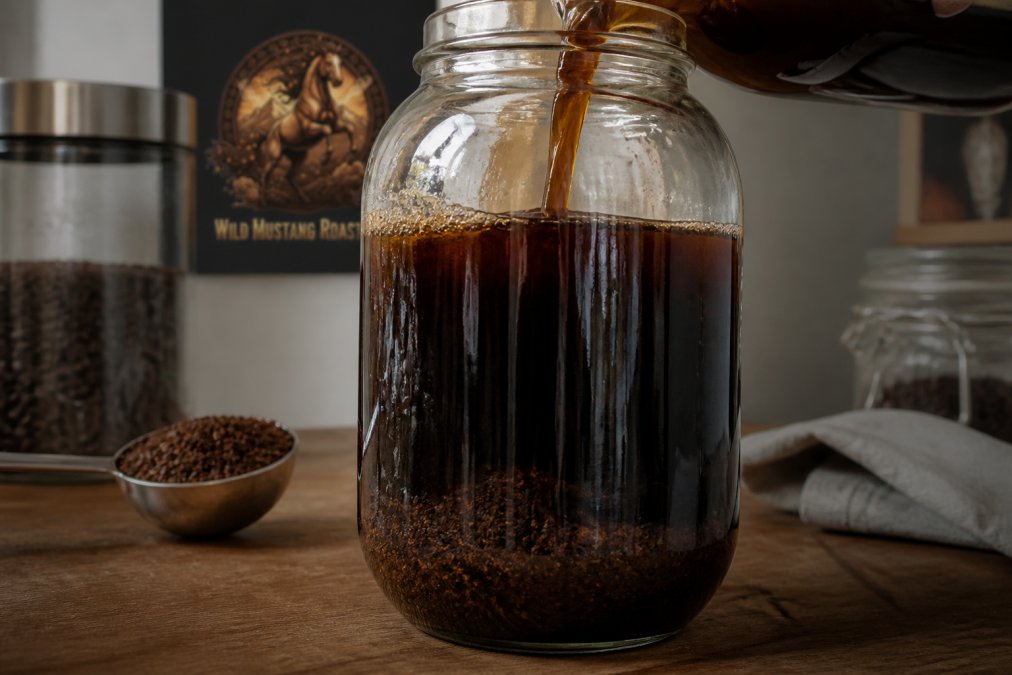
Here's the math that matters:
- 1:4 ratio = Standard strength (dilute with water or milk to taste)
- 1:3 ratio = Bold concentrate (use less per cup)
- 1:5 ratio = Light concentrate (for those who prefer milder coffee)
Standard Ratio vs. Bold Brew
A 1:4 ratio works for most people. But if your cold brew tastes weak even at this ratio, you might need to go bolder.
Try 1:3 instead. Use 1 pound of coffee with 3 pounds of water. This produces a concentrate that's noticeably stronger. When you dilute it with water or milk, you get the body and flavor you're missing.
Dilution Math for Concentrate
Cold brew concentrate isn't meant to be drunk straight (unless you want your heart racing).
Most people dilute it.
- For a strong cup: 1 part concentrate + 1 part water
- For a medium cup: 1 part concentrate + 2 parts water
- For a lighter cup: 1 part concentrate + 3 parts water
If you're adding milk, reduce the water. Milk adds volume and dilutes the coffee further.
Best Grind Size for Cold Brew Extraction
Grind size controls how fast water pulls flavor from the beans. Too fine, and you get over-extraction. Too coarse, and you get under-extraction.
Cold brew needs coarse grounds. Think sea salt, not flour.
Coarse vs. Medium: What Changes
Coarse grounds slow down extraction. Water takes longer to pull the flavors out. This is exactly what you want for cold brew.
Medium grounds extract faster. They work better for hot coffee or pour-over methods. In cold brew, medium grounds often lead to weak, watery results because the extraction happens too quickly in cold water.
Use coarse grounds. Wild Mustang Roasters' Cold Brew Coffee (Dark Roast) comes with very coarse grounds built specifically for slow extraction. This eliminates guesswork.
Particle Size and Over-Extraction
Fine grounds in cold brew cause a different problem: over-extraction.
Water sits with fine particles for 12 to 24 hours. It pulls out too many compounds. The result tastes bitter, not weak. But it's still wrong.
Coarse grounds let water extract the good flavors without pulling the harsh ones.
How Long to Steep Cold Brew for Strength
Time is the engine of cold brew. The longer you steep, the stronger your brew.
But there's a limit. Steep too long, and you get diminishing returns.
12 vs. 24 Hours: Extraction Curves
12 hours: Light to medium extraction. Good for those who like milder cold brew.
16-18 hours: Sweet spot for most people. Flavors are fully developed. You get strength without harshness.
24 hours: Maximum extraction. Bold, full-bodied, and sometimes bitter if your beans are over-roasted or your grind is too fine.
Most cold brew guides recommend 12 to 24 hours. The middle ground, 16 to 18 hours, usually tastes best.
If your cold brew coffee weak after 24 hours, steeping time isn't the problem. Check your ratio and grind size instead.
Temperature and Steeping Duration
Cold water extracts slower than hot water. That's why cold brew takes hours instead of minutes.
Room temperature brewing (65-72°F) extracts faster than refrigerator brewing. If you steep at room temperature, reduce your time by 2 to 4 hours.
Refrigerator brewing (35-40°F) slows extraction significantly. This is the most common method and the safest for food safety. Use the full 16-24 hour window.
Warm water brewing (not recommended, but sometimes attempted) extracts in 4-6 hours but produces a different flavor profile than true cold brew.
Measuring Strength: Total Dissolved Solids (TDS)
If you want to know whether your cold brew is actually weak or just diluted, you can measure it.
Total Dissolved Solids (TDS) is the amount of dissolved coffee compounds in your brew, measured as a percentage. A TDS meter gives you an objective number instead of guesswork.
Target TDS ranges for cold brew:
- Concentrate (before dilution): 1.5-2.5% TDS = strong, ready to dilute
- Ready-to-drink (after dilution): 1.0-1.5% TDS = balanced strength for most people
- Below 0.8% TDS: Tastes noticeably weak and watery
If your cold brew measures below 1.0% TDS as a concentrate, your ratio was too high (too much water) or your steeping time was too short.
Bean Freshness and Roast Level Impact
Fresh beans make better cold brew. Stale beans make weak cold brew.
Coffee begins losing flavor the moment it's roasted.
Roast Level and Cold Brew Extraction Differences
Not all roasts extract the same way in cold water.
Dark roasts (French, Italian, or espresso roasts) have larger, more porous bean structures after the extended roasting process. Cold water penetrates these beans more easily. A 1:4 ratio with dark roast typically produces bold, full-bodied cold brew with chocolate and caramel notes that shine when cold.
Medium roasts (American or city roasts) have denser structures than dark roasts but more porosity than light roasts. They extract well at 1:4 but may taste slightly thinner than dark roasts at the same ratio. If your medium roast cold brew tastes weak, try a 1:3.5 ratio (use 1 pound coffee to 3.5 pounds water) to compensate.
Light roasts (New England or cinnamon roasts) have the densest bean structure. Cold water struggles to extract their delicate, bright flavors within a standard 12-24 hour window. A 1:4 ratio with light roast often produces noticeably weaker cold brew than the same ratio with dark roast. If you prefer light roasts, use a 1:3 ratio and steep for the full 24 hours. Even then, light roasts may taste thinner in cold brew than in hot coffee, this is normal and not a brewing error.
Espresso roasts are the darkest option. They produce extremely bold cold brew. Use a 1:5 ratio to avoid over-extraction bitterness.
Degassing and Solubility
Freshly roasted beans release gases (CO2) for days after roasting. This degassing affects extraction.
If you're buying pre-roasted beans from a roaster, check the roast date on the bag.
Water Quality and Filtration Matter
Filtered water is better.
If your cold brew tastes weak and flat, check your water first. Sometimes the problem isn't the coffee at all.
Common Cold Brew Mistakes to Avoid
Most weak cold brew comes from one of these errors. Fix it, and your next batch will be better.
Under-Extraction and Agitation
Under-extraction happens when water doesn't pull enough flavor from the grounds.
Causes:
- Ratio too high (too much water, not enough coffee)
- Grind too coarse (water can't reach the flavor compounds)
- Steeping time too short
- Water too cold (refrigerator brewing takes longer than room temperature)
Sediment, Mesh Filters, and Clarity
| Problem | Cause | Fix |
|---|---|---|
| Weak taste | Low ratio or short steep time | Use 1:3 or 1:4 ratio, steep 16-24 hours |
| Bitter taste | Over-extraction or fine grind | Use coarse grind, reduce steep time to 16-18 hours |
| Flat taste | Stale beans or poor water | Use fresh beans (5-10 days old), filter your water |
| Watery texture | Too much dilution | Use less water when mixing concentrate |
| Sediment in cup | Fine particles or weak filter | Use paper filter or strain twice |
Weak cold brew usually comes down to three things: ratio, grind size, and steeping time. Get those right, and you're 90% of the way there. Wild Mustang Roasters makes this easier with our Cold Brew Coffee blends, coarse grounds optimized for slow extraction. Subscribe to our email list to get fresh beans delivered when you need them, and never run out of the good stuff.
National Coffee Association brewing guidelines
Specialty Coffee Association extraction standards
Coffee chemistry research on cold extraction
Frequently Asked Questions
What is the ideal coffee-to-water ratio for cold brew?
A standard cold brew coffee ratio is 1 part coffee to 4 parts water by weight, which produces a concentrate. For a 1:1 ratio by volume (about 1 cup coffee to 4 cups water), you'll get a medium-strength brew. To make it stronger, shift toward 1:3 or even 1:2.5 for bold, full-bodied cold brew. Measure by weight if possible, this removes guesswork and ensures consistency across batches.
Does grind size affect cold brew strength?
Yes. Coarse grind is standard for cold brew because it slows extraction and prevents over-extraction, which causes bitterness. Medium or fine grinds extract too quickly in cold water, leading to weak, watery results or sediment buildup. Wild Mustang's Cold Brew Coffee comes in very coarse grounds specifically optimized for slow, clean extraction that delivers full-bodied flavor without the grit.
How long should I steep cold brew to make it stronger?
Cold brew typically steeps 12-24 hours at room temperature or in the refrigerator. Longer steeping (18-24 hours) increases extraction and produces stronger, more full-bodied cold brew. Shorter steeps (12 hours) yield milder flavor. Room temperature brewing extracts slightly faster than refrigeration, so adjust your steep time accordingly.
Why does my cold brew taste watery instead of strong?
Watery cold brew usually results from one or more of these: too much water relative to coffee, too-fine grind size causing under-extraction, insufficient steep time, Check your ratio first (aim for 1:4 or stronger), confirm your grind is coarse, and extend steeping to 18-24 hours.