

Robusta vs Arabica for Home Espresso: A Complete Comparison
Table of Contents
- Robusta vs Arabica: Quick Comparison Table
- Botanical Differences and Bean Morphology
- Caffeine Content and Chlorogenic Acid Levels
- Flavor Profile, Acidity, and Sensory Analysis
- Crema Production and Espresso Extraction Variables
- Best Coffee Beans for Home Espresso Machines
- How to Pull a Perfect Espresso Shot with Each Bean Type
- Robusta and Arabica Blends for Home Espresso
- Frequently Asked Questions
Last Updated: September 27, 2026
Robusta vs Arabica: Quick Comparison Table
When choosing beans for your home espresso machine, the decision between robusta vs arabica espresso comes down to what you want from your shot. Arabica dominates specialty coffee culture with its complexity and nuance, while robusta brings raw power and crema. Neither is universally "better", the choice depends on your brewing method, taste preferences, and what you're willing to spend.
Here's how they stack up:
| Characteristic | Arabica | Robusta | Winner for Home Espresso |
|---|---|---|---|
| Caffeine Content | 1.2-1.5% | 2.2-3% | Robusta (if you want intensity) |
| Flavor Complexity | High (fruity, floral, acidic) | Low (earthy, nutty, bitter) | Arabica (if you want nuance) |
| Crema Production | Thin, delicate | Thick, stable | Robusta (better crema) |
| Price per Pound | $8-15 | $4-8 | Robusta (budget-friendly) |
| Acidity Levels | High (bright, crisp) | Low (smooth, muted) | Arabica (if you prefer brightness) |
| Bean Density | Lower | Higher | Robusta (denser extraction) |
| Best Brewing Method | Espresso, pour-over | Espresso, moka pot | Robusta for espresso body |
The real insight: most commercial espresso blends use both. Arabica brings the flavor story. Robusta brings the body and crema. At Wild Mustang Roasters, we blend specialty-grade Arabica with Robusta in our Italian (Slow) Roasted Coffee to deliver a bold, commanding cup that doesn't sacrifice complexity for power.

Botanical Differences and Bean Morphology
Robusta and arabica are entirely different species with distinct physical characteristics that affect how they behave in your espresso machine.
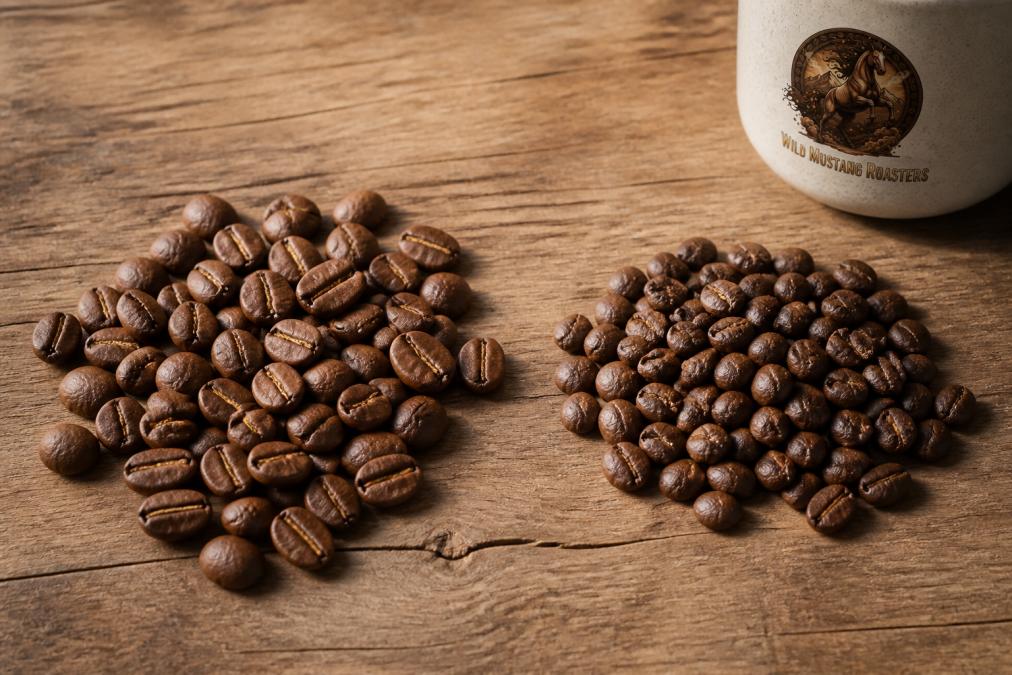
Arabica (Coffea arabica) grows at higher altitudes (2,000-6,000 feet), where cooler temperatures allow complex sugars to accumulate. The beans are larger, more oval, with a visible lengthwise crack. Lower density means water penetrates faster, so arabica shots pull quicker and taste brighter.
Robusta (Coffea canephora) thrives at lower altitudes (1,000-2,000 feet) in hotter climates. The beans are smaller, rounder, and significantly denser. This density resists water penetration, creating longer extraction times and more body. Higher lipid and chlorogenic acid content produces the thick, stable crema many home baristas chase.
Arabica beans look flatter and more irregular; robusta beans look more uniform and spherical. Once you've handled a few of each, you'll spot the difference instantly.
Caffeine Content and Chlorogenic Acid Levels
This is where robusta makes its clearest claim to intensity. Robusta contains roughly twice the caffeine of arabica, around 2.2-3% by weight compared to arabica's 1.2-1.5%. For a home barista pulling a double shot, that translates to a noticeably sharper caffeine hit.
Chlorogenic acid, which contributes to bitterness and acidity, is also higher in robusta. This is why robusta shots taste more astringent and earthy. The higher chlorogenic acid concentration creates a bold, gripping mouthfeel that some drinkers love and others find harsh.
Arabica has lower chlorogenic acid levels, meaning less bitterness and more room for subtle flavor notes. If you're sensitive to jitters, arabica is the safer choice; if you want a cup that hits hard, robusta's chemical profile delivers.
The practical takeaway: don't chase caffeine numbers alone. A well-extracted robusta shot will feel more intense than a poorly-extracted arabica shot, regardless of the raw chemistry. Extraction variables matter more than bean chemistry for the final cup.
Flavor Profile, Acidity, and Sensory Analysis
This is where arabica and robusta diverge most sharply in the cup.
Arabica delivers complexity: fruity notes (berries, stone fruit), floral aromatics (jasmine, rose), and bright acidity (5.5-6.0 pH) that feels crisp on the palate. The body is lighter and more delicate. When you pull an arabica espresso shot, you're tasting terroir, altitude, soil, and processing method are all audible in the cup. This is why single-origin arabicas command higher prices.
Robusta is straightforward and bold: earthy, nutty, sometimes woody flavor notes with hints of chocolate or spice. Lower acidity (6.5-7.0 pH or higher) makes the cup feel smooth and heavy. The mouthfeel is full and thick. There's less nuance, but also less guesswork, you get a powerful, no-nonsense cup.
For home espresso, this matters: robusta's body and low acidity punch through milk drinks beautifully, while arabica's brightness can get lost. For straight shots, arabica's complexity rewards attention; robusta can feel one-dimensional.
Crema Production and Espresso Extraction Variables
Crema, the thick, golden-brown foam on top, is where robusta absolutely dominates arabica.
Robusta produces abundant, stable crema due to higher lipid and sugar content that emulsify under pressure. Arabica produces thinner crema because of lower lipids, not a flaw, just a different look and feel.
Crema is partly a visual cue, not a flavor cue. What matters is extraction, how completely water dissolves the coffee's soluble compounds.
Extraction variables where home baristas gain control:
- Grind size: Finer grinds slow water flow and increase extraction time. Robusta's higher density often needs a slightly finer grind.
- Tamping pressure: Consistent, firm tamping creates even puck resistance; inconsistent tamping causes channeling.
- Water temperature: Most home machines run 195-205°F. Robusta often benefits from the hotter end; arabica from the cooler end.
- Pressure profile: Espresso machines pull at 9 bars. Higher pressure increases extraction yield.
The key insight: a well-extracted robusta shot will have better crema and body than a poorly-extracted arabica shot. Technique trumps bean choice for the final result.
Best Coffee Beans for Home Espresso Machines
Choosing the best beans depends on your machine, your palate, and your priorities.
Choose arabica if: You have a quality grinder and a machine with temperature stability. You want to taste the origin story in your cup. You prefer brightness and complexity over power. You're willing to dial in your shots carefully because arabica rewards precision. You're exploring the Third Wave specialty coffee movement.
Choose robusta if: You want thick, stable crema and full body. You're brewing into milk drinks where robusta's power shines. You want straightforward, bold flavors without complexity.
How to Pull a Perfect Espresso Shot with Each Bean Type
The technique differs slightly between robusta and arabica because of their density and extraction characteristics.
For Arabica:
-
Grind medium-fine, finer than drip, coarser than Turkish. Arabica's lower density means it extracts quickly, so a finer grind slows water flow and gives you more contact time.
-
Dose 18-20 grams into your portafilter for a double shot. Arabica is less dense, so you need slightly less to fill the basket.
-
Tamp firmly and evenly, about 30 pounds of pressure. Any unevenness will cause channeling because arabica's lower density offers less resistance.
-
Pull at 200-205°F water temperature. Arabica's delicate sugars extract best at the hotter end of the espresso range.
-
Aim for 25-30 seconds of total extraction time (from first water contact to last drop). Arabica shots pull faster because of lower density.
-
Expect thin to medium crema, this is normal and doesn't indicate a bad shot. Judge the shot by taste, not appearance.
For Robusta:
-
Grind medium, slightly coarser than arabica. Robusta's higher density resists water penetration, so you can grind coarser without over-extracting.
-
Dose 19-21 grams into your portafilter. Robusta is denser, so the same volume weighs more.
-
Tamp firmly and evenly, robusta's density can handle aggressive tamping without channeling as easily.
-
Pull at 195-200°F water temperature. Robusta's higher chlorogenic acid content can become harsh at very high temperatures.
-
Aim for 28-35 seconds of total extraction time. Robusta's density slows water flow, so longer shots are normal and desirable.
-
Expect thick, stable crema, robusta will reward you with the visual signature most home baristas chase.
Robusta and Arabica Blends for Home Espresso
Blending is where the magic happens. A well-designed blend combines arabica's complexity with robusta's body and crema, creating a shot that's greater than either bean alone.
Frequently Asked Questions
Can I use Robusta for espresso at home?
Yes, robusta works well for home espresso, especially in blends. Robusta produces denser crema and higher caffeine concentration than arabica. Many home baristas mix robusta with arabica to balance body and sweetness. Robusta's higher lipid and sugar content creates a fuller mouthfeel, though it tends toward bitterness. Start with a small amount blended with arabica to find your preference.
Which bean produces better crema for home espresso?
Robusta produces thicker, more stable crema than arabica due to higher lipid content and bean density. The crema lasts longer in the cup and creates a richer visual appeal. Arabica produces finer crema with more aromatic compounds. For home machines, robusta's crema stability makes extraction easier, while arabica offers more complex flavor notes in that crema layer.
What are the main flavor differences between arabica and robusta espresso?
Arabica delivers bright acidity, fruity and floral tasting notes, and complex aromatic compounds. Robusta tastes earthy, bold, and bitter with lower acidity and nutty or chocolate notes. Arabica's flavor profile suits specialty coffee enthusiasts; robusta suits those preferring strong, straightforward coffee. Blending both creates balanced espresso with arabica's sweetness and robusta's body and crema stability.
How much more caffeine does robusta contain than arabica?
Robusta contains roughly double the caffeine concentration of arabica, typically 2.7% versus 1.5% by weight. This means a robusta espresso shot delivers noticeably more caffeine despite similar serving sizes. For home baristas sensitive to jitters, arabica provides gentler caffeine delivery. Robusta's higher chlorogenic acid content also contributes to its bold, sometimes astringent character.
Which bean is more forgiving for beginners learning to pull espresso at home?
Robusta is more forgiving for beginners. Its higher lipid and sugar content tolerates slight extraction variations better, producing acceptable shots even with imperfect grind consistency or tamping pressure. Arabica demands more precision in grind size, dose, and extraction yield. Robusta's crema stability also masks minor mistakes. Once you master robusta, arabica's lower margin for error teaches finer technique.