

How Long Does Loose Leaf Tea Stay Fresh
Table of Contents
- How Long Does Loose Leaf Tea Actually Stay Fresh
- How Long Does Loose Leaf Tea Actually Stay Fresh
- Signs of Expired Tea You Should Never Ignore
- Best Tea Storage Containers and Methods
- How to Store Loose Leaf Tea Properly
- The Difference Between 'Best By' and True Expiration
- Can You Drink Expired Tea Safely
- Reviving Stale Tea and Preserving Flavor
- Frequently Asked Questions
Last Updated: September 22, 2026
How Long Does Loose Leaf Tea Actually Stay Fresh
Loose leaf tea doesn't expire or become unsafe, but to help loose leaf tea stay fresh and maintain its flavor and aroma, proper storage is essential. The real question is whether it will still taste like the bold, complex cup you paid for.
Most loose leaf tea stays fresh for 6 to 12 months when stored properly. The timeline depends on tea type, airtight sealing, light protection, and temperature control.
Oxidation is tea's main enemy. Exposure to oxygen, light, and humidity breaks down volatile oils and tannins, leaving a flat, stale cup instead of the nuanced blend you expected.
How Long Does Loose Leaf Tea Actually Stay Fresh
Black Tea Shelf Life
Black tea is the most stable because it's already fully oxidized during processing, so it resists further breakdown better than less-oxidized teas.
Well-stored black tea maintains excellent flavor for 12 to 24 months in airtight containers away from light and moisture. Our Earl Grey Tea and English Breakfast Tea benefit from this extended shelf life when stored correctly.

Bergamot essential oil in Earl Grey fades faster than the base tea, so citrus notes become subtle after about 8 months. The tea remains safe and drinkable, just with less bright, floral character.
Green Tea Shelf Life
Green tea is trickier because minimal processing leaves volatile oils more exposed, making them break down faster than in black tea.
Fresh green tea tastes best within 6 to 8 months. By month 12, most green teas taste noticeably stale.
Our Jasmine Tea is best enjoyed within 6 months for maximum fragrance and flavor.

White and Herbal Tea Shelf Life
White tea is lightly processed, making it more delicate than black tea but more stable than green. Expect 8 to 12 months freshness.
Herbal infusions aren't true tea, they're dried flowers, roots, and botanicals with lower moisture content, making them more shelf-stable. Most stay fresh for 12 to 18 months.
Our Masala Chai Tea contains spices, maintaining quality for up to 24 months if sealed properly.

Signs of Expired Tea You Should Never Ignore
Stale tea is a disappointment. Learn to recognize when loose leaf tea has crossed from drinkable to stale.
The first sign is aroma loss. Fresh tea should announce itself with a clear scent. If you must lean in close to smell anything, the volatile oils have degraded significantly.
Visual changes matter too. Black teas should look dark and rich, green teas vibrant. Faded, dull color signals accelerated oxidation, especially in green and white teas.
Texture changes signal moisture absorption. Fresh tea should feel dry and crisp. Damp, clumpy, or sticky tea indicates humidity penetration and risk of mold. Discard it.
Taste is the ultimate test. Brew a small cup and pay attention. Does it taste flat and dull? Does it lack the complexity you remember? Stale tea tastes thin, watery, and one-dimensional. The subtle flavor notes disappear. The body becomes weak. If your tea tastes like hot water with a hint of tea flavor, it's past its prime.
Best Tea Storage Containers and Methods
The container you choose makes the difference between tea that stays fresh for months and tea that becomes stale in weeks. The right storage setup protects tea from its four main enemies: light, air, moisture, and heat.
Airtight Containers vs. Resealable Pouches
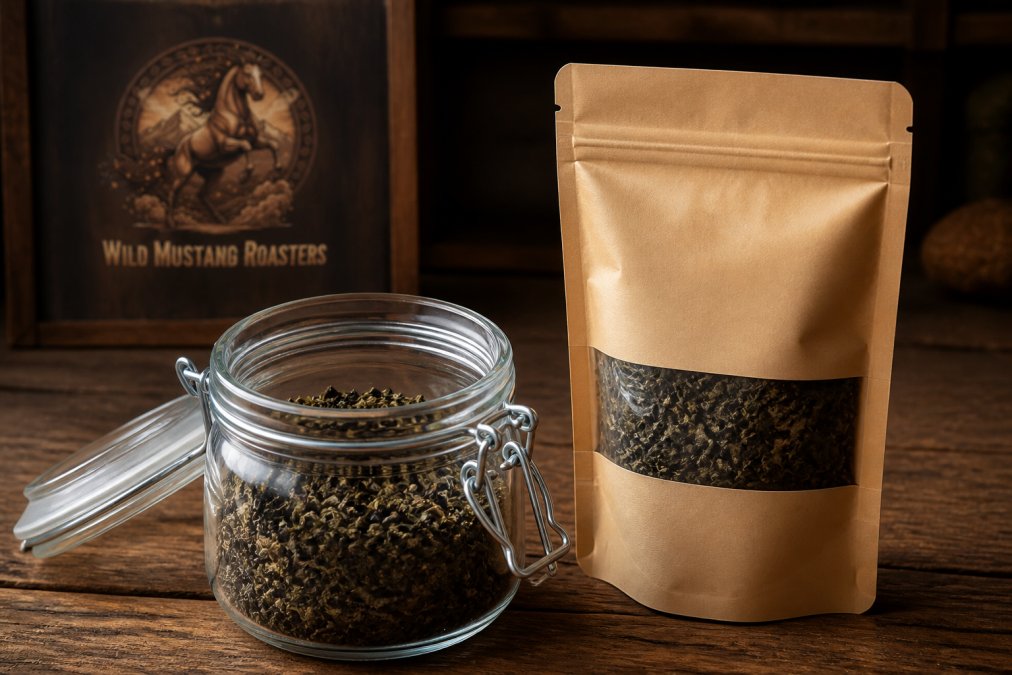
Airtight glass containers are a good option. Glass doesn't leach chemicals or absorb odors, and containers with rubber gaskets or clip-top lids keep oxygen out and preserve aromatic compounds.
Store glass containers in dark cabinets, as transparency allows light penetration.
Resealable pouches offer convenience and space efficiency, but the seal degrades with each opening, allowing small amounts of air inside.
If you choose pouches, look for ones with a zipper seal and an outer layer that blocks light. Store them upright in a cool, dark place. Squeeze out excess air before sealing to minimize oxidation.
The Role of Opaque Packaging
Light accelerates oxidation and breaks down flavor compounds. Premium producers use opaque containers, dark glass, tin, or ceramic.
Store clear glass containers in dark cabinets. Never expose tea to direct or indirect sunlight, which fades color and flattens flavor.
Tin containers are good for tea storage. They block light completely, they're airtight when sealed properly, and they protect against moisture. The downside is that you can't see your tea without opening the container, which means you open it more often and expose the tea to air.
Ceramic containers with airtight lids offer a middle ground. They're opaque, they look attractive on a shelf, and they seal well.
How to Store Loose Leaf Tea Properly
Proper storage is the single most important factor in helping loose leaf tea stay fresh and preventing oxidation, moisture absorption, and flavor loss. The right environment prevents oxidation, moisture absorption, and flavor loss.
Temperature Control and Humidity
Temperature consistency matters more than absolute temperature. Fluctuating temperatures cause air to expand and contract, forcing air in and out and accelerating oxidation.
Keep tea away from heat sources and kitchen counters near windows, which cause temperature fluctuations and light exposure.
Tea absorbs moisture, degrading flavor and risking mold. Aim for humidity below 50% in a cool, dry cabinet away from bathrooms and kitchens.
If you live in a humid climate, consider adding food-grade silica gel packets to your tea containers. These packets absorb excess moisture and help maintain ideal humidity levels.
Climate-Specific Storage Solutions
In hot, humid climates, refrigeration might seem like a good idea, but it's actually problematic. When you remove tea from a cold refrigerator and open the container, condensation forms inside. This moisture damages the tea. If you do refrigerate tea, seal it in an airtight container before placing it in the fridge, and let it come to room temperature before opening.
In dry climates, the main concern is oxidation rather than moisture. Focus on airtight sealing and light protection. Silica gel packets are less critical, but still useful as an extra precaution.
In temperate climates with moderate humidity, a cool, dark cabinet or pantry is perfect.
The Difference Between 'Best By' and True Expiration
Tea packages often have a "best by" date, and understanding what this means is important. A "best by" date is a quality indicator, not a safety deadline. It tells you when the tea will taste its absolute best, not when it becomes unsafe.
Can You Drink Expired Tea Safely
Yes, you can drink tea that has passed its "best by" date without any health risk. The tea won't make you sick. There's no point at which tea becomes toxic or dangerous.
Reviving Stale Tea and Preserving Flavor
If your tea has started to lose its edge but isn't completely stale, there are a few tricks to revive it or make the most of what's left.
Frequently Asked Questions
Does loose leaf tea actually expire or go bad?
Loose leaf tea doesn't expire in the traditional sense, but it does degrade over time through oxidation and moisture absorption. Most loose leaf tea stays fresh for 6 to 12 months when stored properly in an airtight container away from light and heat. Black teas last longer, while delicate green and white teas lose their flavor profile faster. After this period, the tea becomes stale and loses its aroma and potency, though it remains safe to drink.
What are the signs that loose leaf tea has lost its freshness?
Stale tea shows several sensory cues: the aroma becomes dull or nearly absent, the color appears faded or dull when brewed, and the flavor tastes flat or muted. You may also notice a musty or off smell, visible moisture clumping in the leaves, or discoloration. If the tea smells rancid or shows visible mold, discard it. Premium loose leaf teas like our Earl Grey and Jasmine varieties are most noticeably affected, their bright citrus notes and floral character fade first when stored improperly.
How should I store loose leaf tea to keep it fresh longer?
Store loose leaf tea in an airtight container made of glass or ceramic, away from direct light, heat, and moisture. Keep it in a cool, dark pantry rather than near a stove or window. Opaque containers are essential because light exposure causes rapid degradation of volatile oils. Avoid storing tea in clear glass jars on open shelves.
Is it safe to drink expired loose leaf tea?
Yes, expired loose leaf tea is safe to drink as long as it shows no signs of mold, off-odors, or moisture damage. Unlike food with pathogens, stale tea poses no food safety risk. However, the flavor and aroma will be significantly diminished, and you won't experience the intended taste profile. The beneficial compounds degrade over time, reducing the tea's potency. If you want to enjoy the full character of premium loose leaf varieties, consume within 6 to 12 months of purchase.
| Tea Type | Ideal Shelf Life | Peak Flavor Window | Storage Priority |
|---|---|---|---|
| Black Tea | 12-24 months | First 12 months | Airtight seal, dark storage |
| Green Tea | 6-12 months | First 6-8 months | Cool temperature, minimal air exposure |
| White Tea | 8-18 months | First 12 months | Light protection, stable temperature |
| Herbal Blends | 12-24 months | First 12-18 months | Airtight container, dry environment |