

Does Light Roast Have More Caffeine?
Table of Contents
- The Short Answer: Why Light Roast Wins by Weight, Dark Roast by Volume
- Understanding Bean Density and Roast Profile
- How the Roasting Process Affects Caffeine Concentration
- Light Roast vs Dark Roast Flavor Profile and Caffeine Perception
- Best Brewing Methods for Caffeine Extraction
- How to Keep Coffee Beans Fresh Longer and Preserve Caffeine Potency
- Common Myths About Coffee Strength and Roast Level
- Conclusion
- Frequently Asked Questions
Last Updated: September 18, 2026
The Short Answer: Why Light Roast Wins by Weight, Dark Roast by Volume
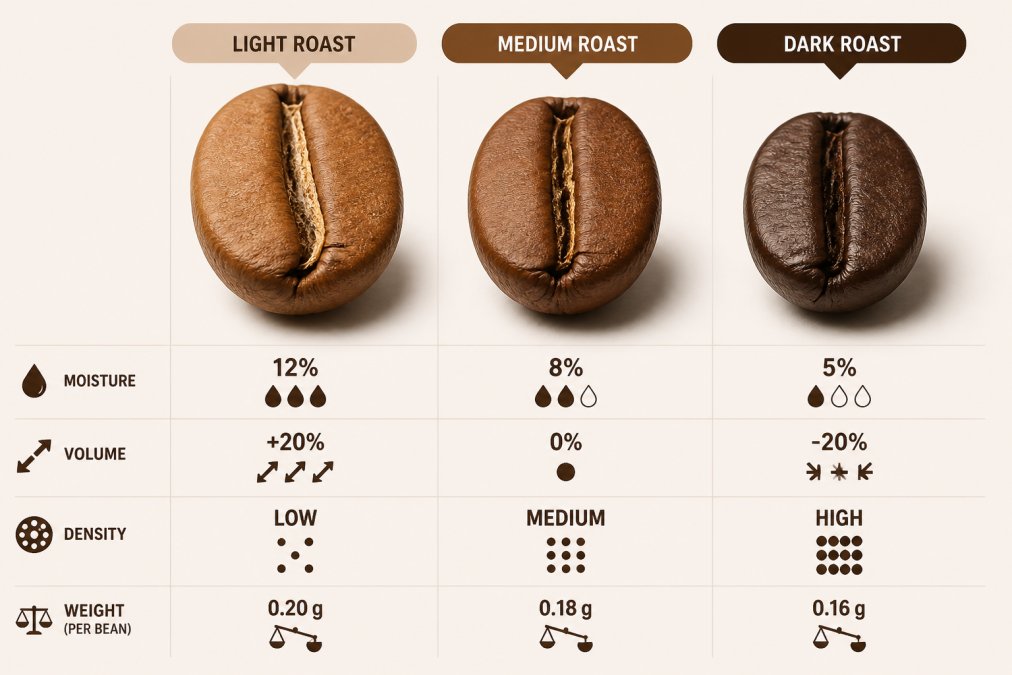
Does light roast have more caffeine? The answer depends on how you measure it. Light roast contains more caffeine when measured by weight because the beans lose less mass during roasting. Dark roast contains more caffeine when measured by volume because the beans expand and become less dense.
Here's what happens: during the roasting process, coffee beans lose moisture and expand. A light roast stops early, preserving more bean density and mass. A dark roast continues longer, allowing greater thermal degradation and expansion. When you scoop coffee by volume, you're actually getting fewer dark roast beans in the same cup because they're fluffier. When you weigh the beans, light roast wins because it retains more of the original bean material.
The practical takeaway: if you measure by weight (using a kitchen scale), light roast delivers more caffeine. If you measure by volume (using a standard scoop or spoon), dark roast delivers more caffeine per scoop. Most home brewers use volume, which is why the "dark roast has more caffeine" myth persists. But the chemistry tells a different story.
Understanding Bean Density and Roast Profile
The roasting process fundamentally changes coffee bean density through moisture loss and expansion. Light roasts are roasted to approximately 356-401°F, stopping before the first crack. Medium roasts reach 410-428°F, typically hitting or just past first crack. Dark roasts continue to 437-482°F, entering second crack territory where the bean structure becomes increasingly compromised.
As heat penetrates the bean, water evaporates. The bean's cellular structure expands to accommodate this loss, creating larger beans with lower density. A light roast bean retains roughly 90% of its original mass. A dark roast bean loses significantly more mass, sometimes dropping to 70-75% of the original weight. This mass difference directly impacts caffeine concentration when measured by weight.
Volume measurements muddy this picture. Because dark roast beans expand more, a standard scoop contains fewer beans by count and total mass. You're scooping air pockets created by expansion, not additional coffee. This is why brewing methods matter enormously. A French press or pour-over using volume measurements will extract more caffeine from dark roast because you're using more beans overall. An espresso machine using weight-based dosing will extract more from light roast.
How the Roasting Process Affects Caffeine Concentration
Caffeine is a stable molecule that survives the roasting process remarkably well. The maillard reaction and caramelization that create roast flavor don't significantly degrade caffeine molecules themselves. What changes is the bean's mass and structure, which alters how much caffeine ends up in your cup.
During roasting, the bean loses approximately 15-20% of its weight in moisture. This concentration effect means the remaining bean material contains caffeine at a higher concentration by weight. However, the total caffeine molecules in the bean don't increase, they're simply packed into less total material. A light roast bean contains more of the original caffeine because it retains more of the original mass.
Thermal degradation at extreme temperatures (dark roast territory) can theoretically damage some caffeine molecules, but this effect is minimal. The primary change is structural. As the bean expands, its cell walls become more porous and fragile. This makes extraction easier during brewing but doesn't add or remove caffeine molecules.
Light Roast vs Dark Roast Flavor Profile and Caffeine Perception
Light roasts preserve more of the bean's origin characteristics, the terroir, altitude effects, and processing method all shine through. Tasting notes of fruit, acidity, and floral qualities emerge because the roasting process hasn't masked them. Our Breakfast Blended Coffee (Light Roast) at Wild Mustang Roasters showcases these qualities with notes of walnuts, mild apple, subtle raisin, and sweet toffee. The brightness and complexity come directly from lighter roasting.

Dark roasts emphasize roast-driven flavors: chocolate, caramel, smokiness, and body. The extended roasting time creates deeper maillard reactions that overshadow origin flavors. These coffees feel heavier on the palate and leave longer finishes. Our Italian (Slow) Roasted Coffee represents this profile, a bold, slow-roasted blend crafted for those who prefer deep, powerful coffee with commanding character.
The caffeine perception differs between roasts, even when the actual caffeine content is similar. Light roasts feel more stimulating because the higher acidity and brightness create a sharper sensory experience. Dark roasts feel smoother and heavier, which some interpret as "stronger" even though they may contain less caffeine by weight. This perceptual difference explains why coffee drinkers develop strong preferences, they're responding to flavor and mouthfeel, not just caffeine.
For busy professionals seeking consistency, medium roasts offer balance. Our Breakfast Blended Coffee (Medium Roast) delivers smooth South American coffee with a balanced profile. It's rich enough to fuel your morning while remaining approachable enough to enjoy throughout the day. The medium roast sits between light's brightness and dark's heaviness, making it versatile across different brewing methods.
Best Brewing Methods for Caffeine Extraction
Caffeine extraction depends on three variables: water temperature, contact time, and grind size. Each brewing method balances these differently, which is why roast selection matters.
French press uses coarse grounds and long contact time (4 minutes). The extended steeping allows thorough caffeine extraction from any roast level, though the coarser grind reduces surface area slightly. Light roasts work exceptionally well here because the longer contact time compensates for denser bean structure. The result is a full-bodied cup with high caffeine content.
Pour-over methods (Chemex, V60, Kalita Wave) use medium-fine grounds and moderate contact time (3-4 minutes). Water flows through the grounds, extracting caffeine efficiently. These methods work well with medium to dark roasts because the faster extraction suits their more porous structure. Light roasts can work but require slightly hotter water and patience.
Espresso machines use fine grounds and very short contact time (25-30 seconds). The high pressure forces water through the grounds rapidly. This method favors darker roasts because their expanded structure allows faster caffeine extraction in the brief contact window. Light roast espresso often tastes sour because insufficient extraction occurs in the short timeframe.
Grind size dramatically affects extraction yield. Finer grinds increase surface area, allowing faster caffeine dissolution. Coarser grinds slow extraction, requiring longer contact time. A common mistake is using the same grind size across all brewing methods. Light roasts benefit from finer grinds (medium-fine) to increase extraction speed. Dark roasts work with coarser grinds because their structure already promotes faster extraction.
Water temperature matters equally. Hotter water (200-205°F) extracts caffeine faster and more completely. Cooler water (195-200°F) extracts more slowly, which can work with dark roasts but leaves light roasts under-extracted. For maximum caffeine extraction, use hotter water and longer contact time, a combination that favors light roasts.
| Brewing Method | Ideal Roast | Contact Time | Grind Size | Caffeine Yield |
|---|---|---|---|---|
| French Press | Light to Medium | 4 minutes | Coarse | High |
| Pour-Over | Medium to Dark | 3-4 minutes | Medium-Fine | Moderate-High |
| Espresso | Dark | 25-30 seconds | Fine | Moderate |
| Cold Brew | Any | 12-24 hours | Coarse | Very High |
How to Keep Coffee Beans Fresh Longer and Preserve Caffeine Potency
Coffee freshness directly impacts caffeine extraction. As beans age, they lose aromatic compounds and become harder to extract. Caffeine itself doesn't degrade significantly, but the bean's ability to release it does. Keeping beans fresh preserves the full extraction potential.
Store beans in airtight containers away from light, heat, and moisture. Oxygen exposure causes oxidation, which stales the beans and makes extraction less efficient. Light exposure degrades flavor compounds and can affect the bean's surface. Heat accelerates all degradation processes.
Common Myths About Coffee Strength and Roast Level
The biggest myth: dark roast has more caffeine. This persists because volume measurements (scoops) favor dark roast's expanded structure. When measured by weight, light roast wins. The myth survives because most home brewers don't use scales.
Conclusion
The answer to "does light roast have more caffeine?" is yes, when measured by weight. Dark roast contains more when measured by volume. This distinction explains the confusion that dominates coffee conversations. Understanding the difference between mass and volume, bean density and extraction efficiency, transforms how you approach coffee brewing.
Frequently Asked Questions
Does light roast actually have more caffeine than dark roast?
Yes, light roast has more caffeine by weight. A gram of light roast beans contains slightly more caffeine than a gram of dark roast because the roasting process causes moisture loss and thermal degradation of some caffeine molecules. However, dark roast beans expand more during roasting, so a scoop of dark roast may contain more total caffeine by volume. The confusion comes from how you measure: by weight favors light roast, by volume favors dark roast.
What's the best brewing method for maximum caffeine extraction?
Immersion brewing methods like French press and cold brew extract more total caffeine because they keep grounds in contact with water longer, increasing extraction yield. Espresso extracts quickly under pressure but delivers less total caffeine per cup.
How does grind size affect caffeine extraction from light roast?
Finer grinds increase surface area, allowing water to extract more caffeine molecules faster. However, grind size must match your brewing method: espresso requires very fine grinds, pour-over needs medium grinds, and French press needs coarse grinds. Using the wrong grind size, too fine for French press, too coarse for espresso, can result in under-extraction and lower total dissolved solids, meaning less caffeine ends up in your cup.
How long do coffee beans stay fresh, and does freshness affect caffeine content?
Coffee beans peak in flavor and caffeine stability 2-14 days after roasting. Store beans in an airtight container away from light, heat, and moisture. Whole beans last 2-4 weeks at peak freshness; ground coffee loses freshness within days. Check the roast date on your bag, Wild Mustang Roasters provides this so you know exactly when your beans were roasted.